
Author

oneonline

Browsing

We all have heard the news — former Youth and Sports Minister of Malaysia, Syed Saddiq Syed Abdul Rahman announced on 17 September that he had just registered a new political party called the Malaysian United Democratic Alliance (MUDA).


Aiming to be a youth party that “represents all levels of society, regardless of race, religion and age” according to The Star, MUDA welcomes people sharing the same vision and ideology on making Malaysia a better place for everyone and not being bogged down with old politics that centers on corruption and racism, to name a few.


An Unnecessary Contender in the Malaysian Political Scene?

When the announcement was made, there were mixed sentiments among Malaysians though (as with any kind of political changes anyway). Some think that Saddiq’s party is child’s play – an unnecessary and rather hopeless formation in the midst of an already unstable governing of the country. Creating a new party doesn’t seem like a smart move.


Then you have some who sees MUDA as a promising start to revolutionizing the entire political scene. Since MUDA is led by Saddiq, a youth himself, there will be more fresh perspectives on improving the current state of our country, plus the plights of youth will now be more heard and not just only seen like in the past. After all, the youth represents the largest population in the working force, and it is the working group that stimulates the economy of the country.


Not only that but MUDA also gives rise to hopes of battling corruption that has been a long-time disease of the land. It may seem like a futile effort to be ambitious about having a corruption-free government with just a small, new party like MUDA, yet the voice of the youth is also not one to be easily discounted off.


Syed Saddiq, the new hope for the country?

Many people, politicians and citizens alike, raise their brow at the mention of Saddiq. Such a reaction is not surprising anyway, considering this Muar MP doesn’t bring much impact during his tenure.


While MUDA is supposed to be a party for all, it doesn’t look that encouraging when the party’s vocal members seem to be made of millennials belonging to the urban part of the country. If the idea of having many members who hail from urban areas means being able to come up with practical, actionable moves that can benefit everyone from all walks of life including the underprivileged, one will call for another to think again. It is always easier to make promises and outline a grand vision, but that all means nothing if they are all empty promises of what could have been.


However, it’s not all gloom and doom though with MUDA’s founder. While Saddiq is not as promising as the youth leader the country strongly looks up to and feel inspired due to lack of political experience & solid judgments in his moves, however, he is a representation of a head start for youths to speak up about matters concerning them and the country.


Staying hopeful with eyes and ears open

Will MUDA create a positive impact on the country?


How long will the party last?


These are all interesting questions the people will speculate and discuss in common gatherings as they sip their favorite kopi and teh tarik. Overall, MUDA seems to present an opportunity for youths to slowly replace the old-timers yet whether they succeed in making their voice heard and truly making an impact in the country’s governance, we will never know.


Safe to say, everyone will continue to take the backseat and monitor as we go along, keeping our eyes and ears open while staying hopeful for the positive changes we pray to see of our beloved motherland.
Is it worth keeping life safe at the expense of the mental health and economy of the country?

When the 8th Prime Minister of Malaysia, Tan Sri Muhyiddin Yassin announced on 10 April 2020 that the Movement Control Order (MCO), also known as Restricted Movement Order (RMO), will be extended for another two weeks until 28 April 2020, the flicker of hope amongst Malaysians to taste the freedom of moving about becomes dim back again.

What is MCO and How Does It Work?

MCO is a rule enforced upon the public to ensure people stay at home instead of being out, which increases the chance of contracting the virus called Covid-19, the cause of the coronavirus pandemic the world faces currently. MCO is meant to flatten the curve of the virus spread, which appears to scale up exponentially at a terrifying rate.

In Malaysia, the MCO commenced on 18 March 2020 and initially, the first phase of the order was supposed to last for two weeks. Only essential sectors are allowed to operate, such as water, electricity, energy, telecommunications, postal, transportation, irrigation, oil, petrol, broadcasting, finance, banking, health, pharmacy, fire prevention, prisons, ports, airports, security, defense, cleaning, food supply and retail. People were told to stay at home, practice social distancing, maintain hygiene and only go out for grocery shopping, banking or essential work.

When the figures of the number of infections and death cases kept increasing, the government decided to extend the MCO to a second phase for a fortnight. Roadblocks were set up monitored by the police and army forces, and social distancing in the form of 1-metre gap queues were extended to even the wet markets.

And just when the whole of Malaysia was looking forward to the end of the order, the government announced yet another 2-week extension. The Prime Minister even hinted at the possibility of extension for 3 months should the pandemic situation remain bleak.

The Dark Side of MCO

Where do we even begin when it comes to the effects of MCO? From the start, many people already feel the pinch of the imposed restricted movement order. The country’s economy is at a steady loss since plenty of sectors deemed non-essential are forced to be stagnant.

Many businesses struggle to maintain their presence by changing their business models from offline to online and dishing out attractive offers to woo their home quarantined customers. Some, unfortunately, are forced to close their businesses forever.

The marginalized daily paid workers and migrant workers are also suffering from the brunt of MCO─these people no longer have a steady stream of income to support their living. Some of them have no food to eat nor a place to stay and could only wait for some kind-hearted souls or NGOs to listen to their plights.

Mental health gets worse too. People are more stressed and depressed from working from home and being stuck within a confined space. Cases of women and child abuse are also on the rise, including increased baby dumping activities.

And the worst part out of MCO? We witness the ugly side of humanity. Panic buying, hoarding, refusing to abide by the MCO rules, scamming on the rise and politicking all in a mix─who would have thought cases like people snatching Gardenia bread and families getting fined for shopping for groceries together against the MCO rule still can happen in a supposed advanced civilization in 2020? It seems such a restriction order brings out the worst in people the longer the MCO drags on.

The Bright Side of MCO

Like everything else, there’s also a good side to the restricted movement order despite the bad parts. The MCO appears to be effective in terms of reducing the number of infections and deaths, and Malaysia has successfully managed to flatten the curve of Covid-19 cases from peaking drastically like other countries such as America, Italy and Spain. Management of the disease is easier since the MCO prevents the gathering of crowds which is the fastest way for the coronavirus to spread.

We also see a huge shift towards doing business online, giving rise to more digital marketing efforts and e-commerce businesses. This trend is good in the long run as the country plans to head further into a wholly digitized nation in line with the original 2020 vision.

It is also reported that crime rates have dropped thanks to the enhanced roadblocks and checkpoints. Not only that but worldwide pollution is also much reduced since many factories are unable to operate and vehicles are taking a break from travelling on the road, which are one of the main sources of air and water pollution.

The MCO is also a good time for the public to spend more time with their family, pick up new hobbies, exercise regularly and work on things they love but do not have the time to do otherwise prior to MCO. It is also the perfect chance to slow down in life from what used to be a hectic lifestyle and gives room for all of us to reflect, appreciate and be grateful to one another.

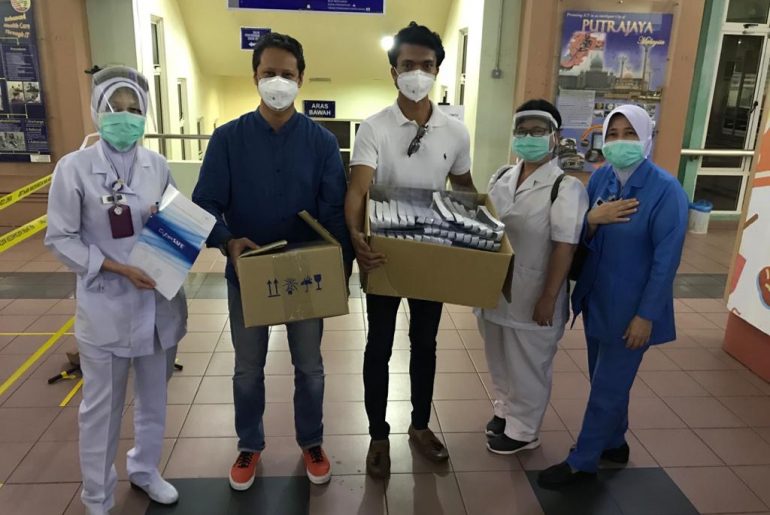
We also see good Samaritans and NGOs stepping out to tend to the needy and poor by distributing free food, masks and sanitizers throughout the MCO. At an individual level, there are also generous souls who help to share food and groceries with neighbours. At least it is heartwarming to know that the MCO does bring out the best in people too.

MCO Doing More Good than Harm, or Harm than Good?

As the nation strives to make do with the MCO, most of us can’t help but to wonder…Is the MCO doing the country more good than harm or otherwise?

Is it worth sacrificing freedom & economy for health & safety?

How long does it take for things to go back to normal even after MCO?

No one has the absolute answer to thoughts but one thing for sure, it will take a long time for the country and its people to recover from the effects of MCO apart from the coronavirus pandemic itself.

Regardless, let us all continue to weather the dark times by doing our parts to battle against the deadly virus. And most importantly, never lose hope ─ The better days will come soon enough.